



 Publication date: 02.02.2026
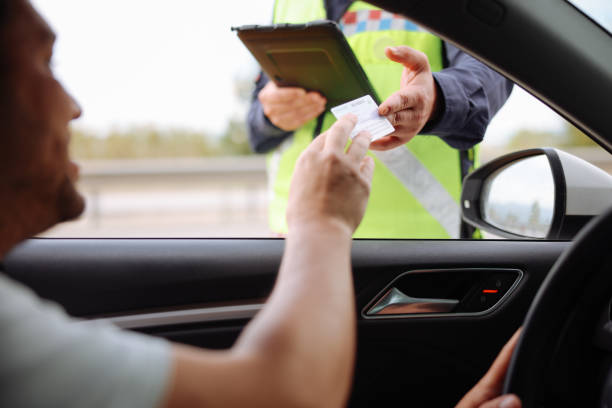
Roadside checks are a common practice on Polish roads, and one of the most common grounds for holding drivers accountable is a fine for lack of documents during a roadside check. Despite the fact that electronic registers and digital databases are being actively introduced in Poland, in practice disputes still arise between drivers and the police. Not all drivers clearly understand what documents they are required to carry and in which cases the absence of a paper document is not a violation.
Often, a fine is imposed formally, without taking into account the current regulations and technical capabilities of data verification. In such situations, timely legal analysis and a correctly chosen defense strategy play a key role, allowing the consequences to be minimized or the imposed fine to be completely canceled.
Theoretical principles: the driver's obligation to carry documents
Polish legislation establishes the driver's obligation to carry documents confirming the right to drive a vehicle and the legality of participation in road traffic. Such documents, depending on the situation, may include a driver's license, an identity document, as well as vehicle registration documents.
At the same time, current regulations provide that some information may be checked by the police directly through electronic state registers. It is at this stage that misunderstandings often arise when an officer does not take into account applicable rules or incorrectly interprets their application to a specific situation.
When a fine for lack of documents may be unjustified?
Not every fine for lack of documents during a roadside check is automatically legal. In practice, there are cases where a driver has a valid license or other required permits but does not have them physically at the time of the check, while the relevant information is already available in official databases. In such situations, appealing a fine for lack of documents may be fully justified, especially when:
- the police officer did not use electronic data verification;
- the fine was imposed without proper justification;
- recent legislative changes were not taken into account;
- the driver was not properly informed about the grounds for liability.
Correct legal reasoning and references to regulatory acts often allow the fine to be canceled or the sanctions to be significantly mitigated.
Driver's rights during a document check
During a roadside check, the driver is not only obliged to comply with lawful police requirements but also has clearly defined driver's rights during a document check. These include the right to receive information about the reason for the inspection, the legal grounds for imposing a fine, and the right to disagree with the officer’s decision.
The driver may refuse to accept the fine, which opens the way for further administrative or judicial proceedings.

Although many drivers are reluctant to exercise this right due to fear of complications or lack of knowledge, a well-prepared legal position in practice significantly increases the chances of a positive outcome.
Why you should seek legal assistance?
Legal assistance in the case of a fine for documents is not limited to the formal filing of an appeal. First and foremost, it includes a detailed analysis of the circumstances of the roadside check, an assessment of the police officer’s actions and their compliance with current legislation. The lawyer determines whether procedural violations occurred and evaluates the real prospects of a successful appeal. Professional legal support allows drivers to:
- avoid hasty and unfounded decisions;
- correctly prepare an objection or appeal;
- comply with all procedural deadlines;
- reduce financial risks and time costs;
- receive support at every stage of the proceedings.
Practical stages of legal assistance
Legal support in cases related to fines for missing documents usually includes several stages: an initial consultation, analysis of case materials, preparation of a legal position, submission of an appeal and, if necessary, representation of the driver’s interests before competent authorities. Particular attention is paid to appeal deadlines and cost assessment so that the client clearly understands the scope and format of legal assistance.
Fines for the absence of documents during roadside checks in Poland are not always justified, and their legality often depends on specific circumstances and proper compliance with procedures. Knowing your rights, understanding your obligations and timely legal analysis make it possible to effectively protect the driver’s interests and avoid unjustified sanctions. If you are faced with a controversial situation or need professional support, contact Consultant Legal Marketplace. Our specialists will provide qualified legal assistance, assess the prospects for an appeal and help protect your rights on the roads of Poland.
FAQ
Question
Does not having a document with you always mean a fine?
Answer
No, in many cases the data can be checked through electronic registers and the fine may be unjustified.
Question
Can a fine be waived at the inspection site?
Answer
Yes, the driver has the right to disagree with the fine, after which the case is considered in accordance with the established procedure.
Question
What documents must a driver have with him?
Answer
It depends on the situation, but usually it is a driver's license and vehicle documents.
Question
Is it effective to appeal a fine for not having documents?
Answer
Yes, provided that the legal arguments are correct and the procedure is followed.
Question
When should you seek legal advice?
Answer
The best time is immediately after receiving a fine or a questionable roadside inspection.